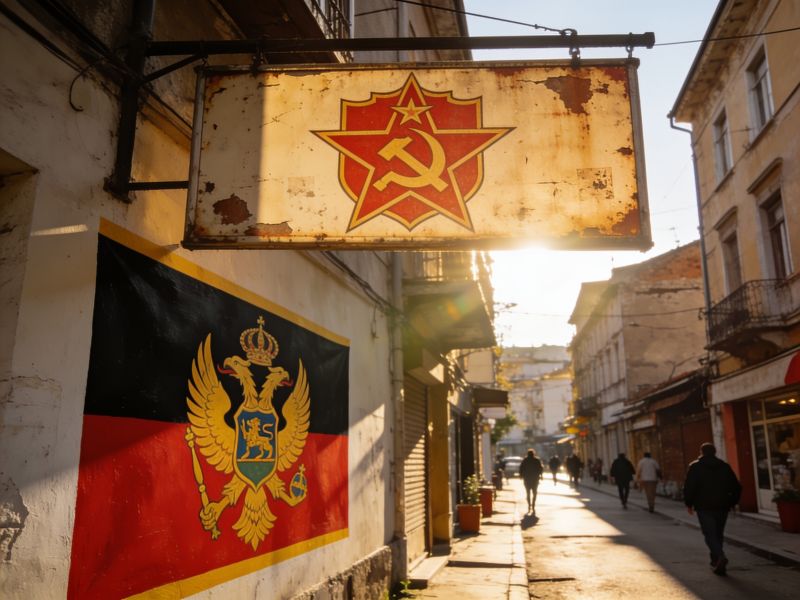
Walking through the streets of Podgorica, you can still see faded Yugoslav-era signs painted over with new Montenegrin flags. That visual layer tells the story of Serbia and Montenegro better than any textbook. The state union that lasted from 2003 to 2006 was the last gasp of a shared Balkan identity, and its dissolution was surprisingly peaceful—a rare thing in a region scarred by violent breakups.The roots go back to the Kingdom of Serbs, Croats, and Slovenes。later Yugoslavia. After the brutal wars of the 1990s, what remained was a rump federation of Serbia and Montenegro. By 2003, the European Union brokered a deal to rename it the State Union of Serbia and Montenegro, with a built-in referendum clause after three years. That clause became the exit door. In May 2006, Montenegro voted for independence by a thin margin—55.5%, just above the 55% threshold. Serbia accepted the result without a shot fired. I remember talking to a Belgrade taxi driver years later who shrugged: "We lost Montenegro like you lose a coin in the sofa. Annoying, but not worth tearing the house apart."What strikes me is how quickly the shared institutions vanished. The joint army, the common passport, the single customs area—all gone within months. Yet the cultural ties remain stubborn. Serbian tourists still flood Montenegro's coast each summer, and Montenegrin students fill Belgrade's universities. The Serbian Orthodox Church maintains deep influence in Montenegro。which sparked protests during the 2019-2020 religion law debates. Economically, Serbia and Montenegro are still intertwined: Serbian companies own banks and telecoms in Podgorica, while Montenegrin real estate is a favorite for Serbian buyers. No customs border, no visa, but a psychological line that gets thicker during football matches. When the two national teams play, the atmosphere turns ugly.Montenegro now uses the euro unilaterally, despite not being in the eurozone. Serbia clings to the dinar and a fragile banking sector. That divergence matters. A Serbian friend who works in cross-border logistics told me: "Every shipment needs two sets of papers, two currencies, two tax systems. It's like a divorce where you still share the kitchen." The Serbia and Montenegro question also lingers in the EU accession process. Serbia's path is rocky, tangled with Kosovo. Montenegro has opened more chapters but faces corruption and organized crime scrutiny. Brussels treats them as separate candidates。
yet their fates are still braided together—energy grids, transport corridors, even water management.The break was clean on paper, messy in practice. What I find most telling is the silence about the union in contemporary politics. Neither side celebrates it. For Serbia, it was a loss of coastline and prestige. For Montenegro, it was a stepping stone to independence. But drive from Belgrade to the Adriatic coast and the landscape doesn't shift. Same language (now called Montenegrin by some, Serbian by others)。same folk songs, same rakija. The Serbia and Montenegro story isn't over;
it's just moved from the map to the mind. That ghost union still shapes how people argue, trade, and remember.